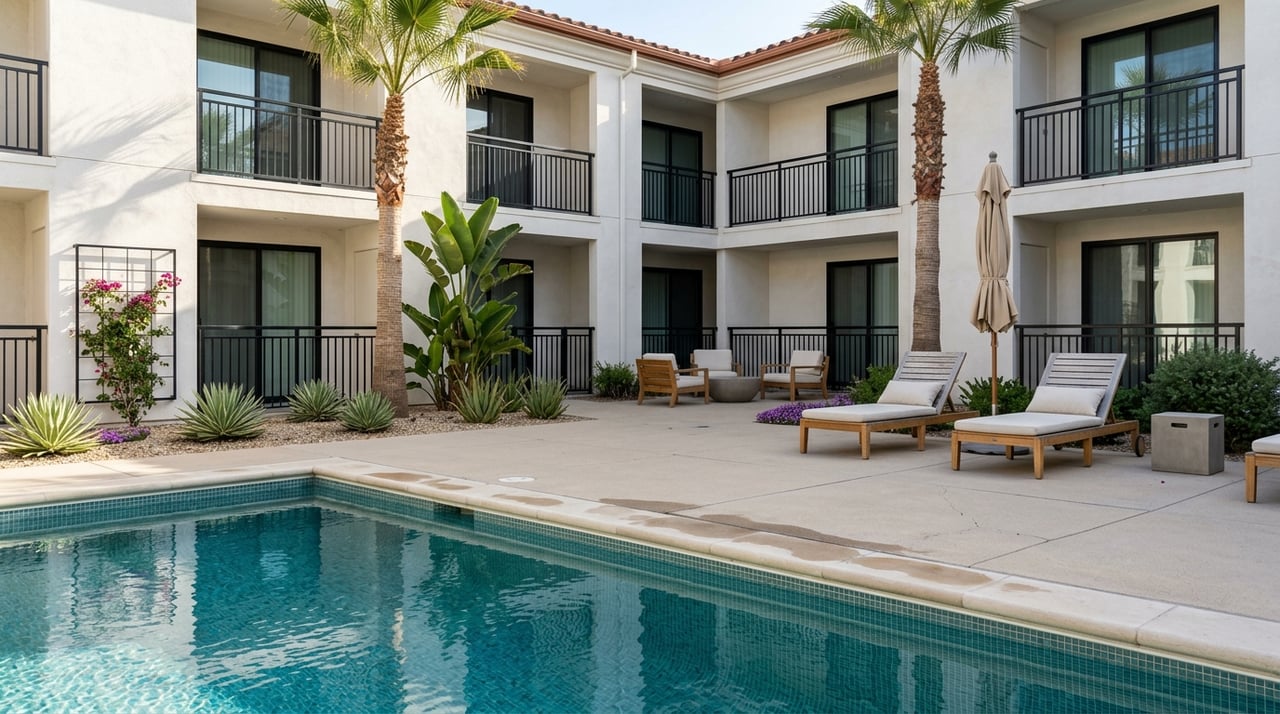
La Jolla Condo Buying Guide: What Buyers Need to Know
May 28, 2026
May 28, 2026
Buying near the coast sounds exciting until you realize one word can change everything: condo. In La Jolla, condo shopping is not just about square footage or views. You also need to weigh HOA finances, building age, parking, rental rules, and the exact sub-area you want to live in. If you want a clearer path to buying a condo in La Jolla, this guide will help you understand what matters most before you write an offer. Let’s dive in.
La Jolla’s condo market works more like a collection of micro-markets than one single market. That is important because two condos with the same bedroom count can feel very different in price, dues, and lifestyle depending on where they sit.
A helpful broad benchmark comes from attached-home data in 92037. In April 2026, the median sales price for attached homes was $1,061,250, compared with $3,950,000 for detached homes. Attached homes also averaged 64 days on market with 2.7 months of supply, which helps explain why condos are often the practical entry point for buyers who want a La Jolla address without moving into detached-home pricing.
This area tends to offer a lower entry point than the Village core or oceanfront buildings. Current condo listings here run around $605,000 to $1.098 million, and Realtor.com shows a median listing price of $815,000.
This is a useful reminder that the name on the listing matters. “La Jolla Village” can refer to a more UTC-adjacent condo market, which is very different from the premium central Village market many buyers picture first.
La Jolla Shores usually sits in a higher price band. Current condo listings range from about $1.13 million to $2.695 million, while the broader neighborhood median listing price is $2.447 million.
If your search priorities include coastal access and a Shores location, expect pricing to reflect that. This is one reason it helps to define your non-negotiables early, especially if you are balancing budget against proximity to the coast.
The central Village is a premium condo market. Current Village condo listings show a median listing price of $2.8499 million, with active examples from about $949,500 to $3.095 million.
Oceanfront options sit at the top end of the range. Oceanfront La Jolla Village has a median sale price around $2.45 million, and 939 Coast currently shows active condos from roughly $1.349 million to $4.472 million+.
Bird Rock condos are also firmly in the higher-price category. Active condo listings are roughly $1.299 million to $1.998 million, while the broader Bird Rock neighborhood shows a median sale price of $2.4075 million.
For buyers, the takeaway is simple: your budget may fit La Jolla, but not every part of La Jolla in the same way. The sub-area you choose will shape both your price range and your day-to-day living experience.
When you buy a condo, you are also buying into a homeowners association. That means your monthly cost is not just principal, interest, taxes, and insurance. HOA dues can add a meaningful amount to your carrying costs.
In La Jolla, dues vary widely by building age, amenities, and service level. Current examples include about $355 per month at Southpointe, roughly $356 to $401 per month at Regents La Jolla, $565 per month at Cape La Jolla Gardens, $810 to $972 per month at Del Charro Woods, $820 to $1,820 per month at Oceanfront La Jolla Village, and $1,865 per month at 939 Coast.
There is often a tradeoff between monthly dues and building features. For example, Cape La Jolla Gardens, built in 1996, includes a pool, exercise room, clubhouse, and a detached two-car garage.
At the other end of the spectrum, 939 Coast, built in 1966, offers 24/7 security, valet, concierge, pool, spa, fitness center, clubhouse, guest suites, EV charging, and an assigned garage space. Those kinds of full-service amenities can be appealing, but they usually come with significantly higher dues.
Many of La Jolla’s prime condo communities date from the 1960s through the 1990s. That does not make them a poor choice, but it does make the financial review more important.
Older buildings may have more maintenance history, larger shared systems, and a greater chance of future capital projects. Before you commit, make sure you understand how the HOA is handling reserves, insurance, and any planned improvements.
California law requires sellers of condos to provide a strong set of HOA-related disclosures in resale transactions. This includes governing documents, rental restriction language, approved assessment changes, requested board minutes, and the most recent inspection report.
The annual budget report must also summarize reserves, reserve funding plans, expected special assessments, loans, and insurance coverage. California also requires a reserve study at least every three years, with annual board review.
As a buyer, these documents can tell you far more than the listing description ever will. Pay especially close attention to:
A condo that looks like a strong value on the surface may feel very different once you review the full HOA package. This is where careful due diligence can protect both your budget and your long-term plans.
In La Jolla, the building itself is only part of the story. Local coastal regulations may also affect what you can do with the property after you buy it.
The City of San Diego says projects in the Coastal Overlay Zone may require a Coastal Development Permit before a construction permit is issued. Some coastal areas are also subject to the Coastal Height Limit Overlay Zone, also known as Proposition D.
If you are planning a future remodel, exterior change, or other improvement, extra review may be required depending on the property and the scope of work. Even if you are buying a move-in ready condo, it is smart to ask questions now if upgrades are part of your long-term plan.
This matters most in a market where many buyers are paying a premium for location and may want to personalize the property over time. Knowing the potential approval path in advance can help you avoid surprises later.
Parking in La Jolla can be very building-specific, especially closer to the coast. You should confirm exactly what comes with the unit instead of assuming every condo offers the same convenience.
Current listings show just how different parking setups can be. For example, 939 Coast shows one garage space along with subterranean, gated, controlled-entrance, private, and valet parking. A condo at 8615 Via Mallorca includes a detached two-car garage, while a Shores condo on Torrey Pines Road shows a two-car garage with HOA dues around $800 per month.
Before you move forward, verify:
These details matter more than many buyers expect. In a coastal area, parking convenience can shape your daily routine just as much as the floor plan.
If you are buying as an investor, a part-time owner, or someone who wants future flexibility, rental rules deserve early attention. In La Jolla, you need to look at both city regulations and the HOA’s governing documents.
San Diego requires a Short-Term Residential Occupancy license for rentals of less than one month. A host may hold only one license at a time, and whole-home short-term rentals outside Mission Beach fall under Tier 3, with a 1% citywide cap, a 90-day annual use requirement, and a two-night minimum stay.
The city also requires rental tax registration and remittance for short-term and vacation rentals, including condos and rooms. On top of that, any HOA rental prohibition must be disclosed in the resale packet.
This is one of the biggest condo buying mistakes to avoid. A unit may seem perfect for a second home or investment strategy, but that does not mean the HOA rules or city rules support your plan.
Before you buy, make sure the building actually allows the type of use you want. That one step can save you from buying a property that does not fit your goals.
With so many moving parts, it helps to keep your decision focused on the issues that most affect value and livability. In La Jolla, the strongest condo decisions usually come down to a few core categories.
A condo can be an excellent way to stay coastal without entering detached-home pricing. But the right purchase is rarely just about the lowest list price. It is about finding the building, fee structure, and rule set that support the way you actually want to live.
If you want help comparing La Jolla condo options with a clear eye on monthly cost, building fit, and long-term flexibility, Sophia Russo can help you navigate the details with local insight and responsive guidance.
Stay up to date on the latest real estate trends.
Start your San Diego move with confidence. Connect with Sophia today and get clear guidance, honest support, and a strategy tailored to your next big step.