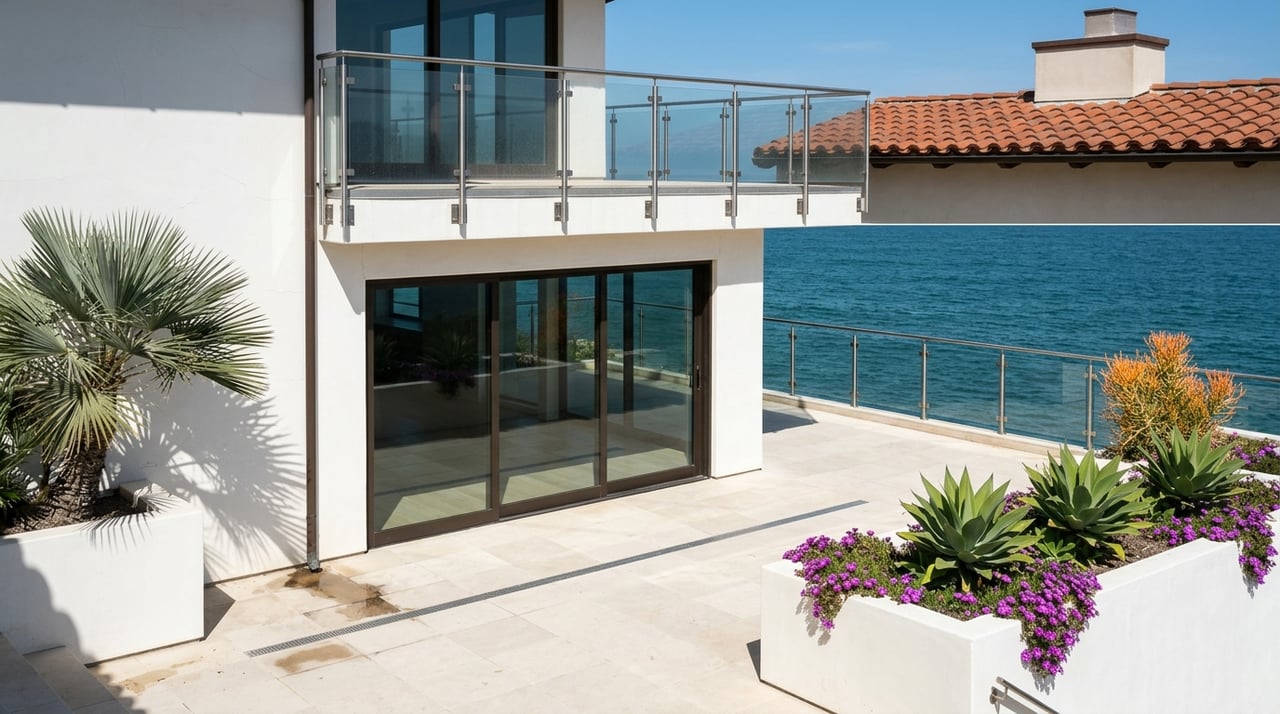
Essential Guide to Buying La Jolla Oceanfront Homes
April 16, 2026
April 16, 2026
Buying an oceanfront home in La Jolla can feel like the ultimate coastal dream, but the view is only part of the story. If you are considering a bluff-top or shoreline property here, you are also buying into a tightly constrained market, a layered coastal permit system, and a set of long-term questions about stability, access, insurance, and future improvements. The good news is that with the right due diligence, you can move forward with far more confidence. Let’s dive in.
La Jolla is one of San Diego’s most visually striking coastal communities, and it is also one of the most limited in terms of new supply. The City describes La Jolla as shaped by ocean bluffs, beaches, canyons, and hillsides, and notes that the community is about 99% built out, with most new development occurring as infill. You can review that community overview through the City of San Diego’s La Jolla community page.
That built-out condition matters because scarcity tends to shape value. In La Jolla, buyers are often paying for more than interior finishes and square footage. They are also paying for limited parcel availability, protected coastal character, and the reality that future changes may face stricter review than they would inland.
As a broad market reference, Redfin’s La Jolla market data as cited by the City showed a median sale price of about $2.4 million in February 2026, with homes averaging about 50 days on market. That figure reflects La Jolla overall, not oceanfront-only inventory, but it still helps frame the market’s pricing baseline.
One of the biggest surprises for buyers is that an oceanfront purchase is not just about the home as it exists today. It is also about what you may or may not be allowed to change later. In coastal La Jolla, development is shaped by both local rules and California coastal law.
According to the California Coastal Commission’s Coastal Development Permit guidance, development within California’s coastal zone generally cannot begin until a Coastal Development Permit has been issued. In San Diego, some projects are handled locally, but properties in the Appealable Area, which the City says is generally located between the first public roadway and the ocean, may require a separate permitting path.
For buyers, that means remodeling plans should never be treated as automatic. A new deck, expansion, grading work, or other site change may involve more review than expected. If you are buying with a vision for future updates, permit feasibility should be part of your due diligence from day one.
Before you get too far into escrow, confirm whether the parcel is in the Coastal Overlay Zone and whether it falls within the Appealable Area. The City’s coastal permitting information can help frame that question.
This step matters because permit timelines, approval authority, and project risk can change based on where the property sits. If your decision depends on future improvements, this is one of the first items to review.
If the property is on or near a coastal bluff, setback rules become a major part of the purchase analysis. San Diego’s coastal bluff guidelines state that development on the face of a sensitive coastal bluff is generally not permitted. They also state that structures and grading must generally be set back at least 40 feet landward from the bluff edge.
In limited situations, that setback may be reduced to as little as 25 feet, but only if a geology report supports site stability, the project will not require a shoreline or bluff erosion-control device, and the bluff is expected to remain stable over a reasonable economic life of 75 years. You can review these standards in the City’s Land Development Manual coastal regulations.
This has a very practical impact on value. A large lot with dramatic views may still have meaningful limitations on additions, accessory structures, grading, or reconfiguration near the bluff edge. If you are paying a premium for future upside, you will want to know how much usable development envelope the site truly has.
In La Jolla, views are part of the value equation, but they are also part of the regulatory framework. The La Jolla Community Plan emphasizes preserving public views to the ocean and protecting shoreline bluffs, which you can see in the full community plan.
The City’s bluff and beach guidelines go further by noting that if a site has an existing or potential public view, a visual corridor may be required. In some cases, that corridor should total at least 10 feet across affected properties, and no structures or obstructions may be placed within it. Landscaping also must not block required public ocean views, according to the same coastal bluff guidelines.
The same City guidance allows for vertical and lateral access easements when site-specific analysis shows they are warranted. For a buyer, that means the title report deserves especially close attention.
You will want to know whether the property is subject to any recorded view corridor, public access easement, or prior shoreline-protection restriction. These issues may affect privacy, improvement plans, landscaping choices, and long-term resale positioning.
For bluff-top and bluff-adjacent homes, geotechnical review is not a box to check. It is central to understanding the asset. The coastal rules are designed around hazard avoidance, and the California Coastal Act sea-level-rise guidance makes clear that new development should minimize risks in hazard areas and avoid relying on protective devices that substantially alter natural landforms.
San Diego’s sea-level-rise vulnerability work also notes that beaches can shrink or disappear as sea levels rise, and that coastal bluffs in areas including La Jolla can face increasing erosion impacts. For you as a buyer, that makes current site conditions, drainage behavior, bluff retreat, and slope stability critical questions.
If the home is bluff-top or very near a bluff edge, ask whether the seller has a current geology or geotechnical report. If one exists, review it carefully. If not, you may want to explore whether updated expert evaluation is appropriate during your investigation period.
Some buyers assume that if erosion becomes a problem, a seawall or other protective structure can simply be added later. Coastal law does not make that automatic. The California Coastal Commission’s sea-level-rise and shoreline protection guidance says devices such as seawalls and revetments are allowed only when needed to protect existing structures or public beaches in danger from erosion, and only when designed to reduce adverse impacts on shoreline sand supply.
San Diego’s coastal bluff guidelines also state that erosion-control measures may not be used to accommodate proposed development or enlarge the top of bluff. In simple terms, you should not buy assuming future shoreline armoring will solve every bluff or erosion concern.
That is why site history matters. If a property already has stabilization measures, those improvements should be understood in context. If it does not, future protective options may be more limited than many buyers expect.
Flood risk is another issue that deserves a fresh look, even if a property has not raised concerns in the past. The City of San Diego says FEMA’s Physical Map Revision takes effect on March 3, 2026, and may change flood insurance and regulatory requirements. The City also notes that flood zone boundaries and base flood elevations can change, and that if a property is added to a flood zone, flood insurance may be required to obtain or maintain a mortgage. You can review that update through the City’s floodplain management page.
This is especially important for luxury coastal buyers because insurance costs can materially affect your total cost of ownership. A property’s current and future flood designation may also influence renovation requirements and lender conditions.
There is one cost detail worth knowing. San Diego participates in the National Flood Insurance Program and the Community Rating System, and the City says owners and renters automatically receive a 15% discount on NFIP flood insurance premiums through that program, as described on the same City floodplain page.
That discount may help, but it does not replace a property-specific insurance review. Premiums, coverage terms, and lender expectations can still vary significantly.
On a coastal luxury purchase, insurance should be evaluated early, not near closing. The California Department of Insurance homeowners guide explains that while California does not require homeowners insurance by law, mortgage servicers typically require enough coverage to rebuild the home. The same guide also notes that standard homeowners policies usually do not cover earthquake, flood, mold, earth movement, or wear and tear.
That means you may need to evaluate multiple layers of protection, including homeowners, flood, earthquake, and excess liability coverage. If the property falls in a high-risk flood zone on federal maps, lenders may also require flood insurance.
For buyers who have trouble obtaining coverage in the standard market, the California FAIR Plan is the state’s backstop option. The Department of Insurance says it is available to people and businesses that cannot secure insurance through a regular insurer, and its residential policyholders can access up to $3 million in limits. The same page notes that broader protection may require a separate Difference in Conditions policy.
If you are serious about an oceanfront or bluff-adjacent purchase in La Jolla, these are some of the most important questions to answer during your due diligence:
At a high level, buying oceanfront in La Jolla is less about finding a beautiful house and more about understanding the parcel behind it. The right property is one that aligns with your lifestyle goals, your risk tolerance, and the regulatory realities of the coast.
If you want a local, high-touch guide as you evaluate oceanfront opportunities in La Jolla, Sophia Russo can help you navigate the search process with clear communication, thoughtful due diligence, and local market insight.
Stay up to date on the latest real estate trends.


Start your San Diego move with confidence. Connect with Sophia today and get clear guidance, honest support, and a strategy tailored to your next big step.